
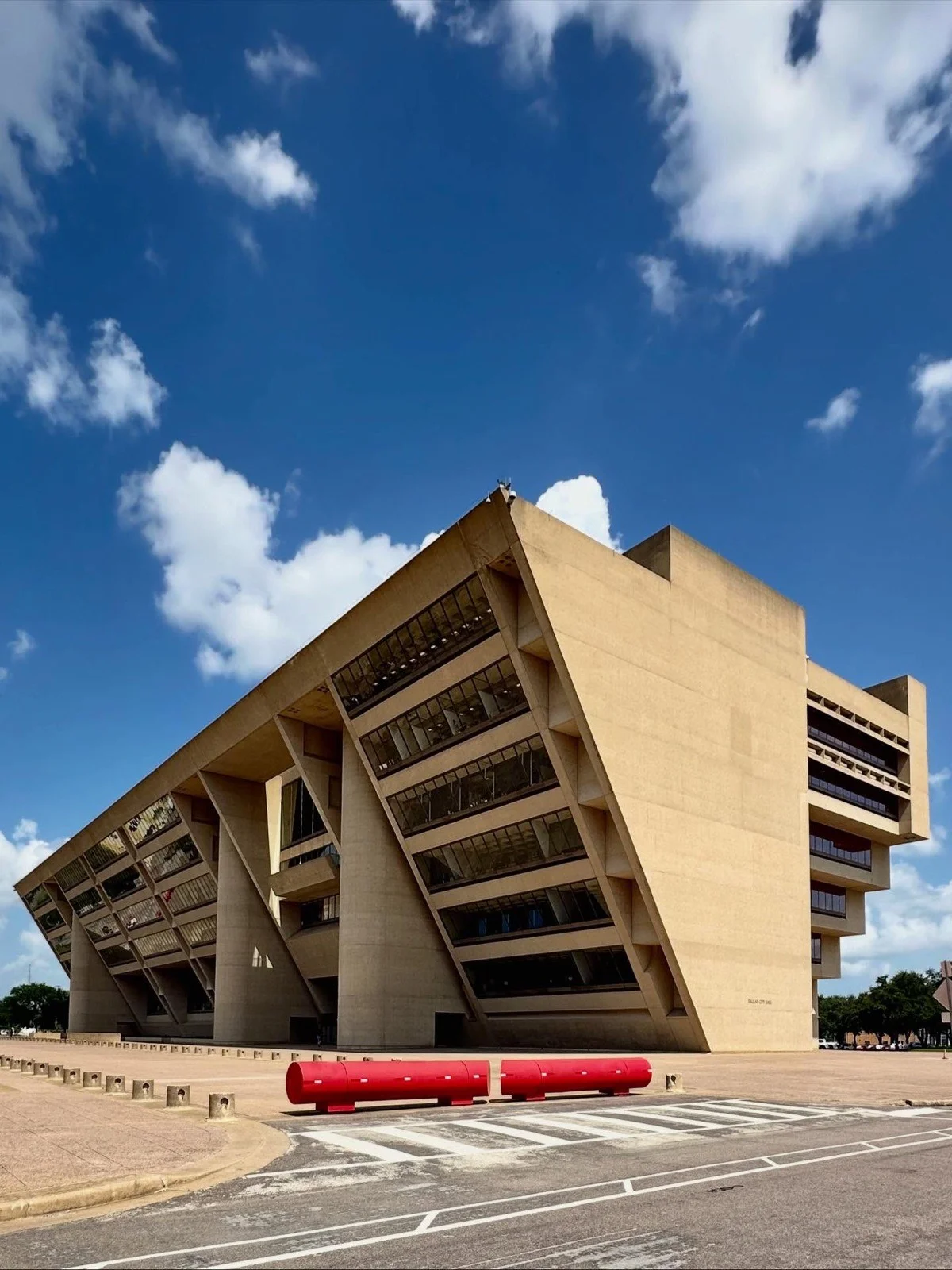
The Modern Movement in Central Texas
Thousands of buildings designed between 1940 and 1975 sit in every city, on every campus, along every commercial strip across the region.
Central Texas is a modernist landscape that most people drive through without noticing. The region stretching from Waco south to Corpus Christi and west to San Angelo contains thousands of buildings designed between 1940 and 1975 in the modernist idiom: clean geometry, honest materials, functional plans, and a relationship with the landscape that earlier architectural styles never attempted.
The climate shaped the architecture. Central Texas designers confronted brutal summers, unpredictable storms, and flat-to-rolling terrain that offered both challenge and opportunity. Their responses — deep roof overhangs, breezeway plans, courtyards, native stone walls married to steel and glass, elevated foundations in flood-prone coastal areas — created a regional modernism distinct from California or the Northeast.
Three categories define the collection. Institutional buildings (university campuses, government buildings, churches, schools) represent the largest and most visible group. Residential modernism (ranch houses, split-levels, architect-designed custom homes) fills the neighborhoods. Commercial modernism (banks, offices, retail strips, motels) lines the highway corridors. Each category faces different preservation challenges.
MCM Regional Map
Locations of surviving examples of mid-century modern architecture within South-Central Texas. Click a pin to learn more.
MCM Regional Map
Locations of surviving mid-century modern architecture
Status
Explore Our Programs
Building Showcase
Our living catalog of significant modernist architecture across Central Texas. Each building documented with photos, history, and condition assessment.
Demolition Schedules
Track mid-century buildings at risk of demolition. Report threats and take advocacy action.
Newsletter
Monthly preservation news, event announcements, and building spotlights delivered to your inbox.
Frequently Asked Questions
This Architecture Will Not Save Itself
Explore, document, and advocate for the modern buildings in your community.
Get Involved Today