
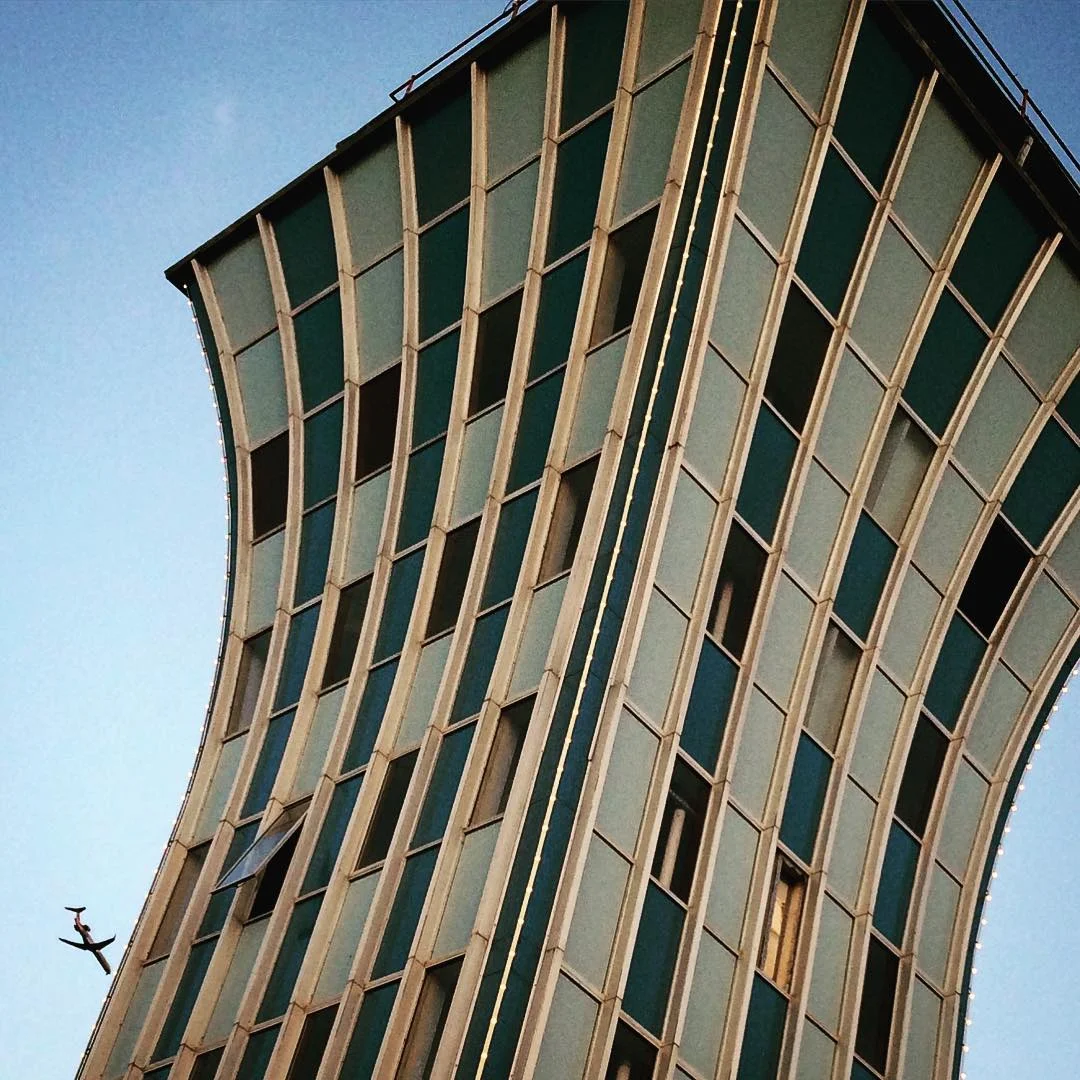
Coastal Modernism in Corpus Christi
Where modernism met the Gulf — a regional strain of architecture defined by deep overhangs, louver systems, and reinforced concrete.
Where modernism met the Gulf. Corpus Christi's mid-century architects faced a design challenge unlike any other Central Texas city: salt air, hurricane winds, and relentless coastal sun. The result was a regional strain of modernism defined by deep overhangs, breeze-catching louver systems, elevated foundations, and reinforced concrete construction. These buildings are not just aesthetically distinctive — they are engineered responses to one of the harshest climates on the Texas coast.
The bayfront tells the story. Downtown Corpus Christi's postwar commercial buildings along Shoreline Boulevard and the surrounding blocks feature some of the Gulf Coast's best examples of mid-century commercial architecture. The Art Museum of South Texas, designed by Philip Johnson in 1972, anchors the bayfront with its cast-concrete forms. Nearby, the Selena Auditorium (originally Memorial Coliseum, 1954) has been a subject of intense preservation debate, exemplifying the tension between redevelopment and heritage.
Naval Air Station influence. Like San Antonio, Corpus Christi's military presence drove mid-century construction. NAS Corpus Christi and the surrounding community received housing, recreational, and operational buildings during the postwar military expansion. These utilitarian modernist structures are often overlooked in preservation discussions but represent an important architectural record.
Mid Tex Mod's coastal documentation project aims to catalog Corpus Christi's most significant modernist buildings before Gulf Coast weathering and redevelopment erase them. We work with local history groups and the Corpus Christi Landmarks Commission to advocate for recognition of mid-century buildings alongside the city's better-known maritime heritage.
Frequently Asked Questions
Stand Up for the Bayfront's Heritage
Corpus Christi's mid-century landmarks need advocates today.
Take Action Now